Updated: November 7, 2025
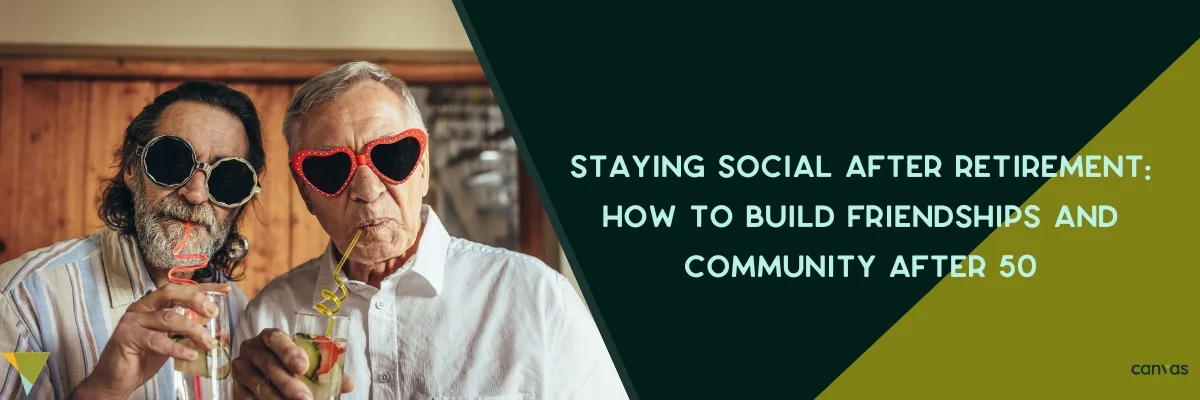
Staying Social After Retirement: How to Build Friendships and Community After 50
While many older adults experience periods of social isolation, loneliness does not have to be part of aging. With a little intention and a few simple strategies, it’s easier than you might think to stay socially active during your retirement – and doing so can help keep your body and your mind strong and vibrant.
The Loneliness Epidemic Among Seniors
The American Medical Association (AMA) says loneliness is a worldwide epidemic.
Loneliness can impact people of any age, but older adults are particularly vulnerable. According to a poll from the University of Michigan Institute for Healthcare Policy and Innovation, 33% of people between the ages of 50 and 80 reported feeling lonely in the last year, and 29% said they were isolated some of the time or often.
Why It’s Important to Build Friendships After 50
In 2023, U.S. Surgeon General Vivek Murthy, MD, issued an advisory called Our Epidemic of Loneliness and Isolation. The advisory explains that loneliness is associated with an increased risk of cardiovascular disease, dementia, stroke, depression, anxiety and premature death. The impact of social isolation on mortality is equivalent to the impact of smoking 15 cigarettes a day. It’s even worse than the impact of obesity and physical inactivity. Social isolation also has a negative impact on society as a whole.
If you want to age well, one of the best things you can do for yourself is to make sure you stay socially active. You may inevitably lose social connections as your children grow up and move away or as you leave the workforce, so it’s important to continuously and intentionally take steps to make new friends.
Overcoming the Challenges of Making New Friends After 60
It is possible to make friends at any age, but as you probably noticed, it’s harder when you’re older, for three reasons:
1. The People You Used to Hang Out With Are No Longer in Your Circle
- Challenge: When you reach 65, you may find that your life looks entirely different than it did when you were 45. As a working person, you may have relied on your job for social interaction. When you retire, it’s easy to lose touch with old colleagues and time tends toerode the connections you once took for granted. Likewise, if you are a parent, you probably spent many years hanging out with other parents. When your kids graduate, you stop running into those people. Your neighbors and the makeup of your own household may change. Unfortunately, many of these diverse social alterations culminate at the same time. Suddenly, you have no one to talk to.
- Solution: Find new social connections! Join a club, sign up for a class, and put yourself out there. Remember, loneliness is an epidemic. Just like nutrition, exercise and sleep, socializing must be a high priority. If you are intentional about socializing, you’ll discover that many people are eager to make connections.
2. Health, Hearing and Mobility Issues
- Challenge: If physical limitations make it difficult to get out of your house, you could become socially isolated. Hearing is also a significant barrier. Some seniors stop socializing because conversations are so frustrating.
- Solution: Ask your doctor if there are treatments or aids that can help you reclaim your social life. Also, consider other ways to increase social connection, such as joining online activities, using Zoom to chat with friends and family, or having people come over to your home. There are nonprofit organizations that will arrange for visits for homebound seniors.
3. Money Concerns
- Challenge: Going out can be expensive. If you’re trying to save money and stick to a tight budget, you may decide it’s cheaper to stay home – but that can lead to social isolation.
- Solution: If money is really tight, find low-cost ways to stay social, such as walking or hiking with friends, attending free library events, or hosting a game night or a karaoke contest at your home. Also consider whether you’re being too frugal. According to Barron’s, some retirees are so worried about running out of money that they refrain from spending money even though they have plenty. If you have money but are still worried, look for new management strategies that provide financial certainty and peace of mind, such as purchasing an annuity that provides guaranteed retirement income.
4 Proven Ways to Make Friends After Retirement
In kindergarten, making friends was easy. As we grow older, it’s admittedly a little more challenging, but it is possible and worth the extra effort. Below are four ways to get started:
- Join a Club. You can join clubs for reading, quilting, playing board games, traveling, and countless other activities. This is a great way to explore your interests while meeting people with similar interests.
- Enroll in a Class. This could be anything from a one-time cooking class at your local community center to a semester at your local community college. You’ll learn something new and meet people at the same time.
- Volunteer. Retirees have extra time on their hands, and they can use some of that time to give back to the community. Pick an organization you’re interested in, whether it’s the local animal shelter, a nearby park, a soup kitchen or something else, and see what volunteer roles are available. You’ll feel good about helping out a worthy cause while meeting people.
- Make the First Move. If you’re socially active with clubs, classes, and volunteer work, you’ll meet new people, but turning these acquaintances into friends can require courage. As with dating, someone has to make the first move. If you hit it off with someone, exchange phone numbers and invite them out for coffee or something similar so you can talk more.
Where Can I Find Social Groups for Retirees Near Me?
Your community likely has many social groups for retirees. Some of these may exclusively serve seniors, while others may welcome people of all ages.
Here are some places to look:
- Library. Many libraries offer book clubs, board game groups, and classes for the community.
- Senior Center. Your local senior center may have classes, clubs and social activities designed specifically for older adults.
- Community Center. Community centers often offer classes, clubs and social activities for people of all ages.
- Dog Parks. Who doesn’t love the dog park? It’s an easy place to meet others.
- Interest-Based Organizations. For example, if you enjoy playing pickleball (or want to learn), you can look for a local pickleball organization. If you like birding, you can join the local chapter of the National Audubon Society.
- Facebook Groups. Look for local Facebook groups that align with your interests.
- Meetup.com. This website makes it easy to find or start groups in your area around a shared interest.
Enjoy Your Retirement with Friends
After years of hard work and dedication, retirement is your chance to embrace new experiences, rediscover old passions and build meaningful connections. While forming new friendships may require time and a little courage, it’s one of the best investments you can make in your well-being. Staying social will fill your life with laughter and support a healthier mind, body and spirit.
Whatever you do, don’t let money hold you back. If you’re worried about running out of money in retirement, an annuity could help ease your fears so you know exactly how much income you have coming in – every month, for the rest of your life.
The Forever Fund is a customizable single premium immediate annuity (SPIA) that can provide lifetime income. Learn more.





Resource Hub