
Table of Contents
- How to Start Saving for Retirement
- How Much Do You Need to Retire?
- Plan How Much You'll Withdraw Each Year in Retirement
- When Should You Start Saving for Retirement?
- How Much to Save for Retirement by Age
- Useful Financial Tools to Grow Retirement Savings
- Speed Up Saving for Retirement with a Fixed-Rate Annuity
Updated: September 26, 2024
How to Start Saving for Retirement
If you find planning for retirement intimidating, you’re not alone. According to a 2023 poll from Gallup, 66% of Americans worry about not having enough money for retirement.
Saving money for the future while keeping up with your needs today can feel like a tough balancing act. But, with careful planning ahead of time, you can get there. In this article we’ll cover how much to save, when to start saving, and what financial tools to use so you feel financially confident about retirement.

How Much Do You Need to Retire?
Exactly how high do you need to save? Do you need $1 million saved to retire comfortably? Figuring out how much to have banked for retirement will be different from person to person. Consider your lifestyle, anticipated expenses, and how they could affect your yearly retirement income. Here are common expenses you can use to figure out how much income you’ll need annually:
- Healthcare: This is likely to be your largest expense during retirement. As you age you may require more medical services and healthcare costs can rise over time.
- Living Expenses: What you spend on food, groceries, housing and utility bills, shopping, and more adds up. Record your spending habits now to plan for you day-to-day living expenses in retirement.
- Insurance: This includes premiums for health, auto, and home insurance, which may vary depending on your circumstances and coverage choices.
- Outstanding Debt: Entering retirement debt-free is ideal, but not always realistic. Try to plan to pay off debts such as mortgages, car loans, and credit cards before retiring, or make sure to account for remaining debt repayments in your retirement budget.
- Transportation: Consider costs like fuel and upkeep on your vehicle if you drive or consider your yearly anticipated costs for public transportation.
- Leisure and Vacations: Retirement should be fun! Consider the costs for hobbies, travel, and leisure activities that should be part of your budget.
Plan How Much You'll Withdraw Each Year in Retirement
Estimating expenses can help you gauge how much you need to save away for two, even three decades of retirement. It’s one thing to save up, but you should also have a strategy for when it’s time to withdraw annual income.
Generally speaking, the 4% rule is a useful starting point for managing withdrawals from your retirement savings. By withdrawing 4% of your total savings in the first year, and adjusting for inflation each time you withdraw, you can create a sustainable income stream. Depending on your actual spending and lifestyle, you may need to adjust this percentage over time.
Aside from annual withdrawals, you can ensure you have a guaranteed stream of income for life by purchasing a fixed-rate annuity. After growing savings with compounded interest over the length of a fixed-rate annuity’s term, you can enjoy the benefits of stable monthly payments from this financial tool.
When Should You Start Saving for Retirement?
The sooner you start saving for retirement, the better. Early contributions benefit from the power of compound interest, which can significantly increase the total amount of your retirement fund.
How Much to Save for Retirement by Age
You have a goal to save up, so how do you get there? If you’re starting early, in your 20s, the common knowledge is to put 10% to 20% of your income into retirement savings annually.
But, sometimes saving up for retirement doesn’t go to plan. If you’re getting a later start, like in your 40s, you may need to bump up contributions to 25% of your income annually to meet your retirement goals.
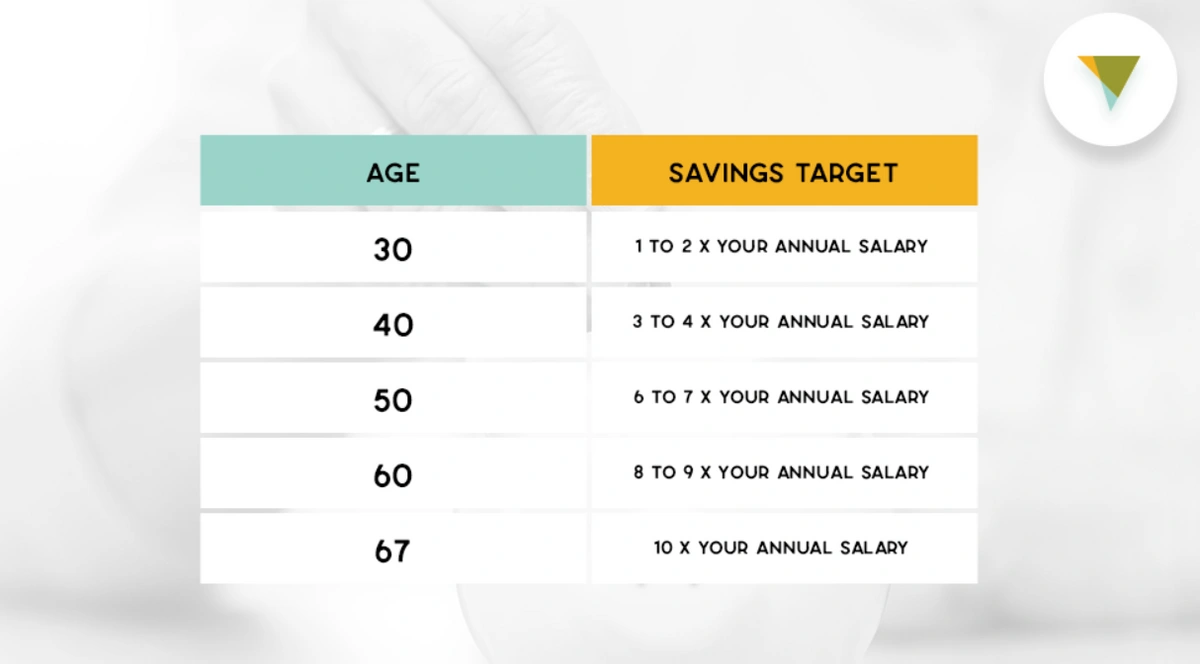
Not sure if you’re on track? Look at the graphic below for an idea on how much you should have saved by age.
Useful Financial Tools to Grow Retirement Savings
When saving for retirement, it's crucial to strike the right balance between risk and security in your investment portfolio. By mixing different types of financial tools, you can have a portfolio that protects your savings while also taking advantage of opportunities to grow. Core financial tools for your retirement include:
-
401K: One of your main vehicles for retirement savings, a 401K plan allows you to contribute pre-tax income and grow it tax-deferred. One of the biggest advantages is employer matching, which can significantly boost your retirement savings by matching a portion of your contributions.
-
IRA: An Individual Retirement Account (IRA) is another way to grow retirement savings. Traditional IRAs have a contribution limit of $7,000 annually, or $8,000 for those aged 50 and above. Traditional IRAs grow tax-deferred, helping you build a substantial nest egg over time. There are also Roth IRAs, where you contribute after-tax dollars with the same contribution limits. Roth IRAs are a good option if you anticipate being in a higher tax bracket when you reach retirement age.
-
Higher Risk Investments: While high risk investments shouldn’t make up the bulk of your retirement savings, they can still have their place in a retirement portfolio. Investments such as stocks, mutual funds, and index funds can deliver higher returns and boost your portfolio’s growth but are subject to market volatility.
-
Lower Risk Investments: Low risk investments are a solid way to build out retirement savings with financial products made for dependability. Consider safer investments like CDs, bonds, and annuities. Annuities are particularly beneficial because they offer guaranteed income and tax-deferred growth, making them a staple in many retirement plans.

Speed Up Saving for Retirement with a Fixed-Rate Annuity
Making sure you’ve accomplished everything on your retirement checklist can be complex. With the right tools and early planning, you can be more confident in your future. Looking for a place to start? Explore our Canvas Retirement Visualization guide to map out what you need for your ideal retirement.
And, of course, you need reliable financial tools to grow your retirement funds. Another way to make sure you reach your retirement goals is with extra financial support from a fixed-rate annuity. Annuities provide a guaranteed income, insulate you from the ups and downs of the market, and have the tax advantages you want in retirement.
Get to know the benefits of annuities from Canvas here. You can apply today or you can buy an annuity online now.





Resource Hub